
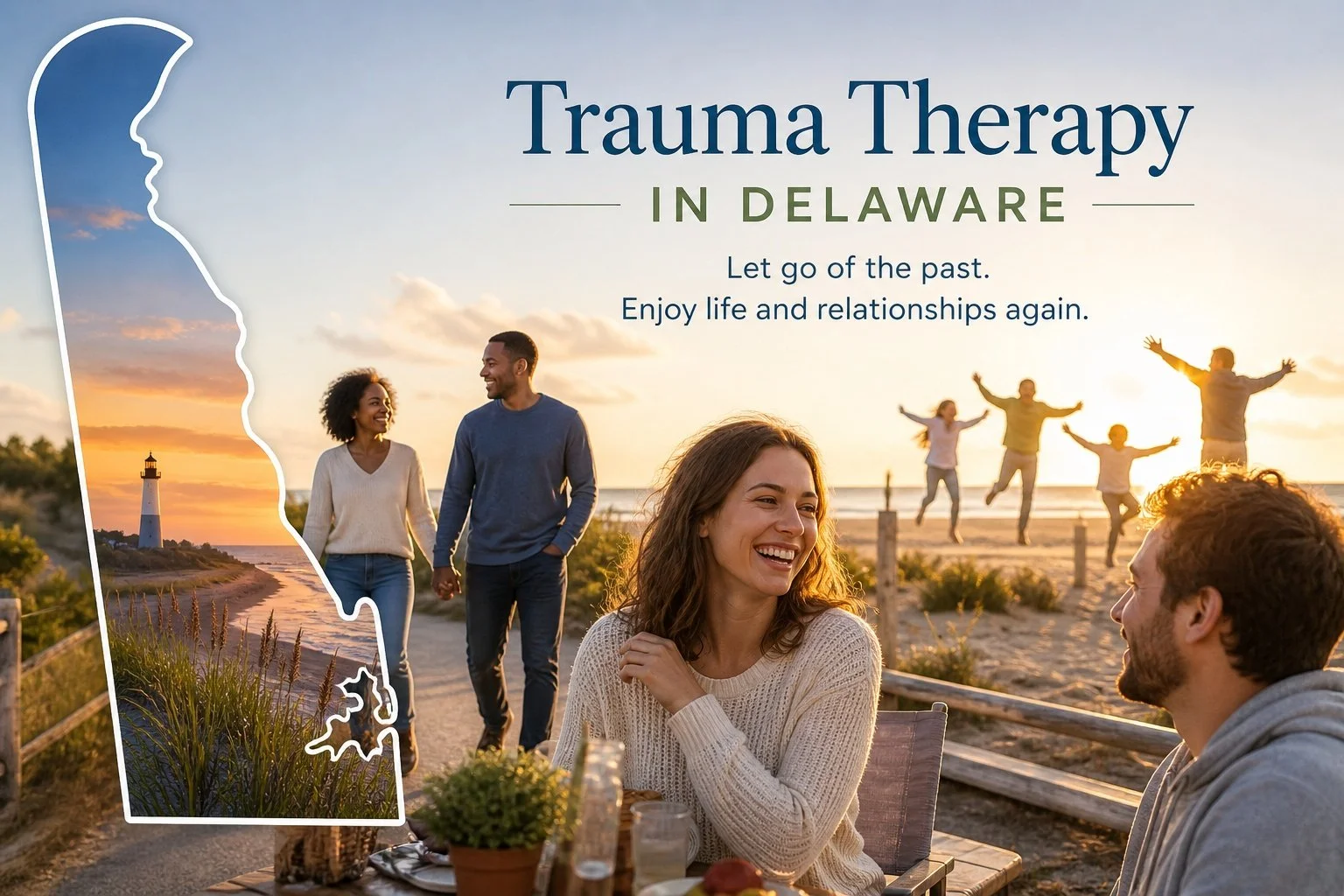
Virtual Trauma Therapy in Delaware
All services are offered via secure telehealth, allowing access to therapy from anywhere in the state.
This makes it easier to stay consistent with care while balancing work, family, and other responsibilities.
Stop feeling weighed down by the past—and start enjoying your life and relationships again.
Many people seek therapy because something doesn’t feel right—but it’s hard to put into words.
You might notice:
The past still affects how you feel, think, or react
Stress or anxiety shows up more than you’d like
Relationships feel harder than they should
You get stuck in patterns you can’t seem to break
You’re not enjoying life the way you want to
It doesn’t have to stay this way.
Services are provided to adults across Delaware, including:
Milford
Dover
Newark
Rehoboth Beach
The focus is simple:
Reduce the impact of the past
Improve how you feel day-to-day
Strengthen your relationships
Help you feel more present and engaged in your life
A structured approach that goes beyond just talking
Therapy here is not just open-ended conversation.
Sessions are designed to:
Help you understand what’s keeping you stuck
Work through experiences that continue to affect you
Build the skills needed to feel more in control
Create meaningful, lasting change
The approach integrates trauma-informed care with structured methods so that therapy feels both supportive and effective.
How EMDR therapy helps you move forward
EMDR (Eye Movement Desensitization and Reprocessing) is a structured, evidence-based approach that helps your brain process and resolve experiences that feel “stuck.”
Instead of only talking about problems, EMDR helps your nervous system:
Reduce the emotional intensity of past experiences
Shift negative beliefs (like “I’m not safe” or “I’m not enough”)
Feel more grounded and in control in the present
Many clients come to EMDR after feeling like traditional therapy helped them understand their problems—but didn’t fully resolve them.
Our Team
A team of highly trained, specialized clinicians providing structured, effective therapy to support meaningful and lasting change.

Alec Peer
Owner, LCSW-CProblems Alec Helps: PTSD/trauma, anxiety, grief, overwhelming emotions, relationship problems.
Who He Helps: Adults
How He Helps: Individual therapy using Eye Movement Desensitization and Reprocessing (EMDR) and Dialectical Behavior Therapy (DBT)
Special Competencies: LGBTQ, People in long term recovery, People feeling stuck from talk therapy

MOre Coming Soon
Focused, approachable, and driven by results, our sales manager is all about building strong relationships. They help connect people to the right solutions—with clarity and care.
Therapist
More Coming Soon
Creative and strategic in equal measure, our marketing director brings fresh ideas to every campaign. They turn insights into action and help our message resonate with the right audience.
Therapist
More Coming Soon
Friendly, attentive, and always ready to help, our customer service manager ensures every interaction is a positive one. They keep communication clear, timely, and human.
TherapistNot Ready for Trauma Therapy?
For those who want help but are not ready to work directly on past experiences, skills-based support can be a strong starting point.
Dialectical Behavior Therapy (DBT) focuses on:
Mindfulness
Emotion regulation
Distress tolerance
Interpersonal effectiveness
These skills help create stability, improve relationships, and build a foundation that makes deeper therapy work feel safer and more manageable.
Your Questions, Answered
-
Accepted insurance plans include:
Highmark
Cigna
Aetna
United Healthcare
Out-of-network options may also be available depending on your plan.
-
That’s more common than you might think. Many approaches focus on understanding problems but don’t always help resolve them. A more structured, targeted approach can make a meaningful difference.
-
That’s completely okay.
Many people begin with skills-based approaches like DBT to build stability and confidence before working on deeper experiences. Learning how to regulate emotions, tolerate distress, and navigate relationships more effectively can make trauma-focused work feel much safer and more manageable.
-
Yes. Anxiety and relationship struggles are often connected to underlying patterns and past experiences. Addressing those patterns can lead to more lasting change.
-
Click “Book Now”. This will take you to our booking page. The first step is scheduling a consultation to see if this approach is a good fit.